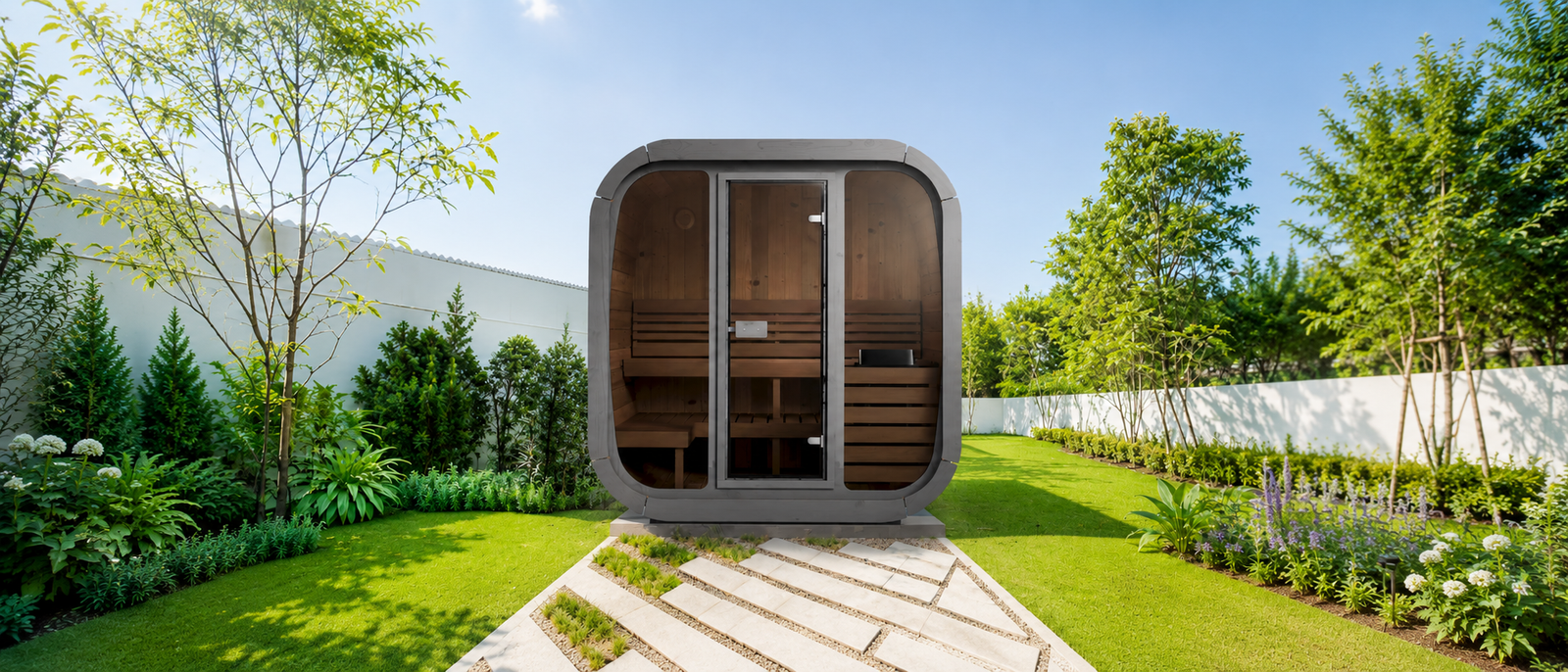
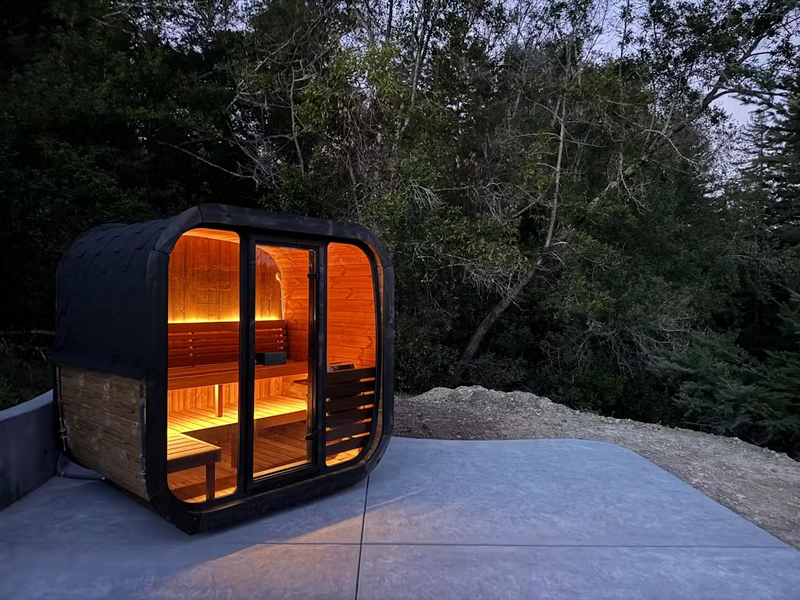
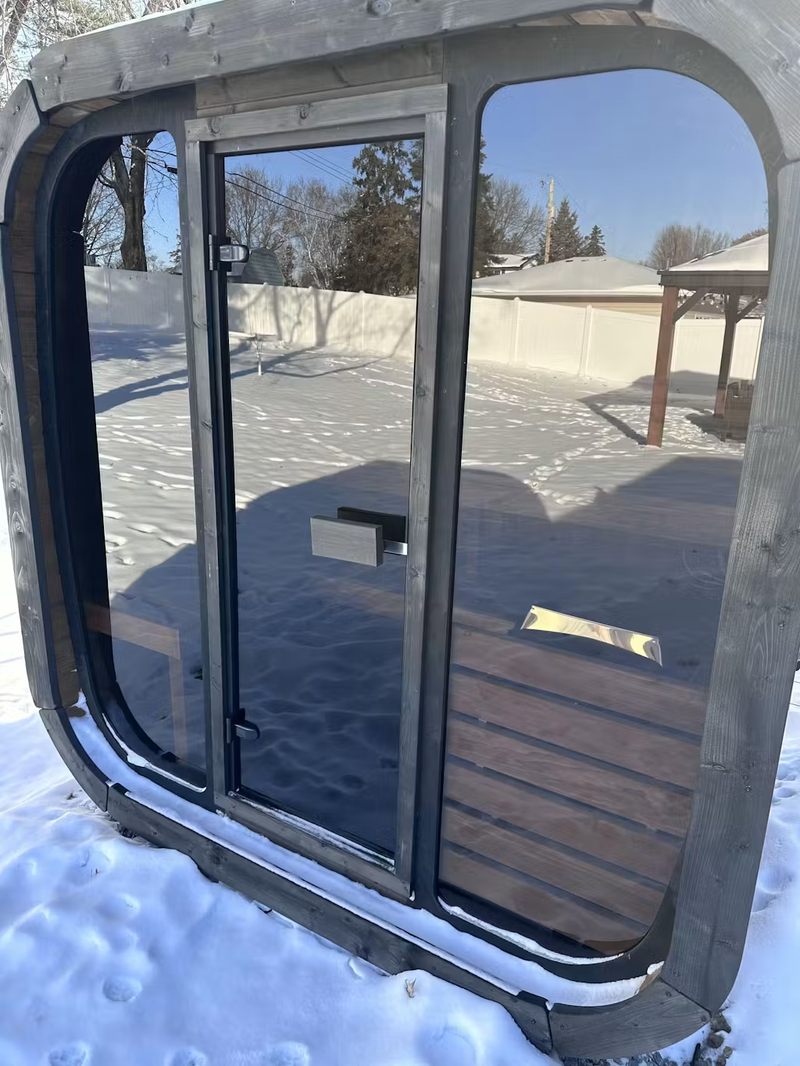
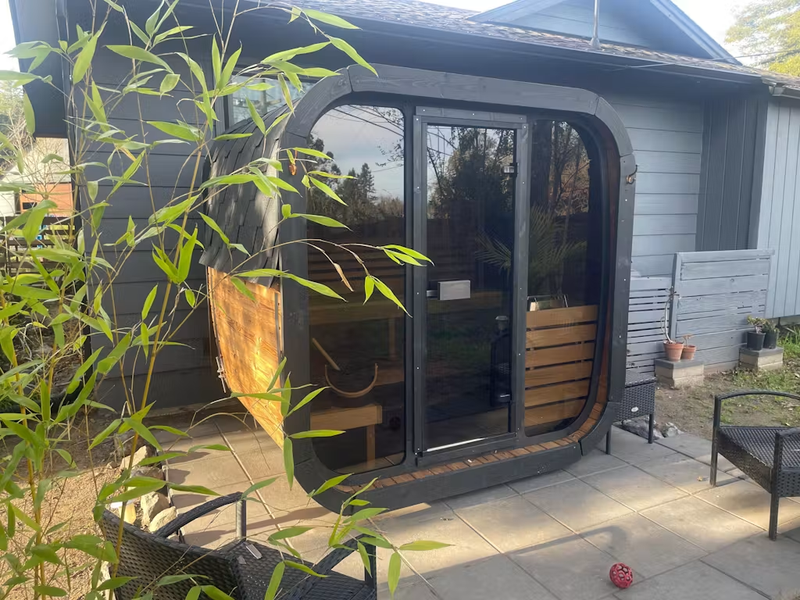
The SaunaLife CL5G's defining architectural feature is its full-glass front wall. This single pane of 8mm tempered bronze glass spans the entire front of the cube and comes preinstalled in the frame. This is a major build time saver as many competing cubes ship their glass loose and require silicone sealing during assembly. SaunaLife ships it as one integrated unit, which both helps with assembly and improves long-term durability.
The exterior is constructed from 1.7" (42mm) thermally modified Nordic Spruce on the side walls, with 28mm Thermo-Spruce on the front and back. Thermal modification is an organic process that removes resins and sugars from the wood, leaving behind a stronger, more stable material that resists rot, pests, and moisture better than conventional spruce. Independent durability classifications support Thermo-Spruce as a longer-lasting material than Western Red Cedar. Thermory's CATAS-tested thermo-spruce is rated Class 1 with 25+ years of rot resistance, while Western Red Cedar is commonly rated Class 2, with a typical 15-25 year outdoor durability range.
SaunaLife pairs Thermo-Spruce walls with Thermo-Aspen benches and backrests. This is an intentional engineering choice. Aspen has virtually no knots and almost no resin, which matters because resin pockets in cedar can occasionally blister and seep sap at peak temperatures above 175°F. Thermo-Aspen also stays cooler to the touch than cedar at high temperatures, which is a measurable difference when you're sitting on a 195°F bench. The trade-off is that aspen has no aromatic profile, so the CL5G doesn't deliver the cedar "sauna smell". With that being said, those who are sensitive to such odors will find this to be a welcome design choice.
The roof system is one of the better-engineered specs in this price range. A complete double-layer black asphalt shingle kit with drip edges sits over a hexagonal Thermo-Spruce roof structure. The hexagonal geometry isn't only decorative; it works in concert with the ventilation system to elevate the exhaust point above the bath zone, improving the natural convection loop.